Bicycling has been surging in the pandemic and children are huge beneficiaries. Biking is not only fun, but it also empowers children and youth, making them masters of their own mobility while boosting their health. But the rules of the road are difficult for children to master, involving complex decisions, especially at intersections, that only seem easy to adults because we have spent years absorbing them. Indeed, from 1961 to 2009 the number of children biking and walking to school plummeted, from 42 percent to 16 percent. In an environment filled with menacing cars, how does one teach children to become safe, confident cyclists?
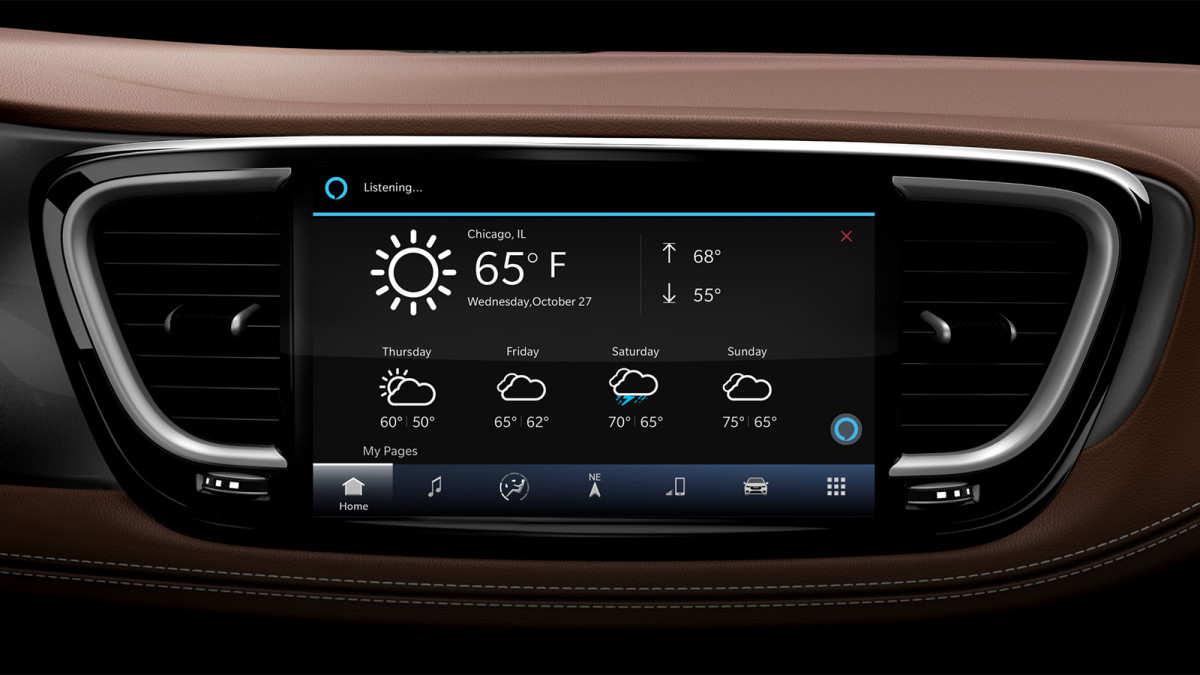
Amazon doesn't build cars, but its presence in the automotive industry is growing. It announced a feature called Alexa Custom Assistant that gives carmakers the ability to customize its voice recognition technology.
At its core, the feature is built around the same artificial intelligence-powered digital assistant that millions of people have in their homes, and that numerous carmakers are putting in their models. Companies who choose to use the Custom Assistant tool kit will be able to personalize the technology by choosing unique wake words, selecting different voices, and either adding or removing features depending on the type of car it's going into.
Amazon will provide the foundation, and each company will choose what to build on it. Dodge could replace "Alexa, start the engine" with "Alexa, fire up my big ol' Hemi," for example. Or, Jeep could teach the assistant to disconnect the Wrangler's sway bars, a function the Chrysler 300 doesn't need. In addition to offering a turnkey solution for an undisclosed fee, and giving companies an alternative to the tedious and expensive process of developing software in-house, Amazon also promises to continuously improve the technology and fix bugs.
Fiat-Chrysler Automobiles (FCA) will be the first company to use Alexa Custom Assistant, though we don't know when it will introduce the feature, or which model(s) will get it first. It's reasonable to assume that other firms will take advantage of it, too. Rivian, which Amazon has poured a substantial amount of money into, comes to mind.
Amazon isn't the only technology company that views the automotive industry as an increasingly important source of revenue. Google makes its Android software available to companies looking for a shortcut to the land of user-friendly infotainment systems. Like Amazon, it provides the shell, and its customers choose what's in it. FCA and Polestar both use an Android-based infotainment system, but the interfaces look nothing alike.
So far, Apple is the only major holdout. Instead of focusing on what it does best — creating software and selling it — it's ostensibly in the process of developing its own car, which it will allegedly ask Hyundai to build.